

CGGBP1 Kaninchen-Polyclonal-Antikörper
Konjugation: Unkonjugiert
polyklonaler Kaninchenantikörper
Anwendung
Reaktivität
Mensch, Maus
Genname
CGGBP1
Lagerung
Aliquot and store at -20°C (valid for 12 months). Avoid freeze/thaw cycles.
Zusammenfassung
| Produktname | CGGBP1 Kaninchen-Polyclonal-Antikörper |
| Beschreibung | polyklonaler Kaninchenantikörper |
| Wirt | Kaninchen |
| Reaktivität | Mensch, Maus |
| Konjugation | Unkonjugiert |
| Modifikation | Unverändert |
| Isotyp | IgG |
| Klonalität | Polyklonal |
| Form | Flüssig |
| Konzentration | Unkonjugiert |
| Lagerung | Aliquot and store at -20°C (valid for 12 months). Avoid freeze/thaw cycles. |
| Versand | Eisbeutel. |
| Puffer | Flüssigkeit in PBS mit 50 % Glycerin, 0,5 % Schutzprotein und 0,02 % Konservierungsmittel vom neuen Typ N. |
| Reinigung | Affinitätsreinigung |
Antigeninformation
| Genname | CGGBP1 |
| alternative Namen | CGGBP1; CGGBP; CGG triplet repeat-binding protein 1; CGG-binding protein 1; 20 kDa CGG-binding protein; p20-CGGBP DNA-binding protein |
| Gene ID | 8545 |
| SwissProt ID | Q9UFW8 |
| Immunogen | Das Antiserum wurde gegen ein synthetisches Peptid, abgeleitet von humanem CGGBP1, hergestellt. Aminosäurebereich: 41–90 |
Anwendung
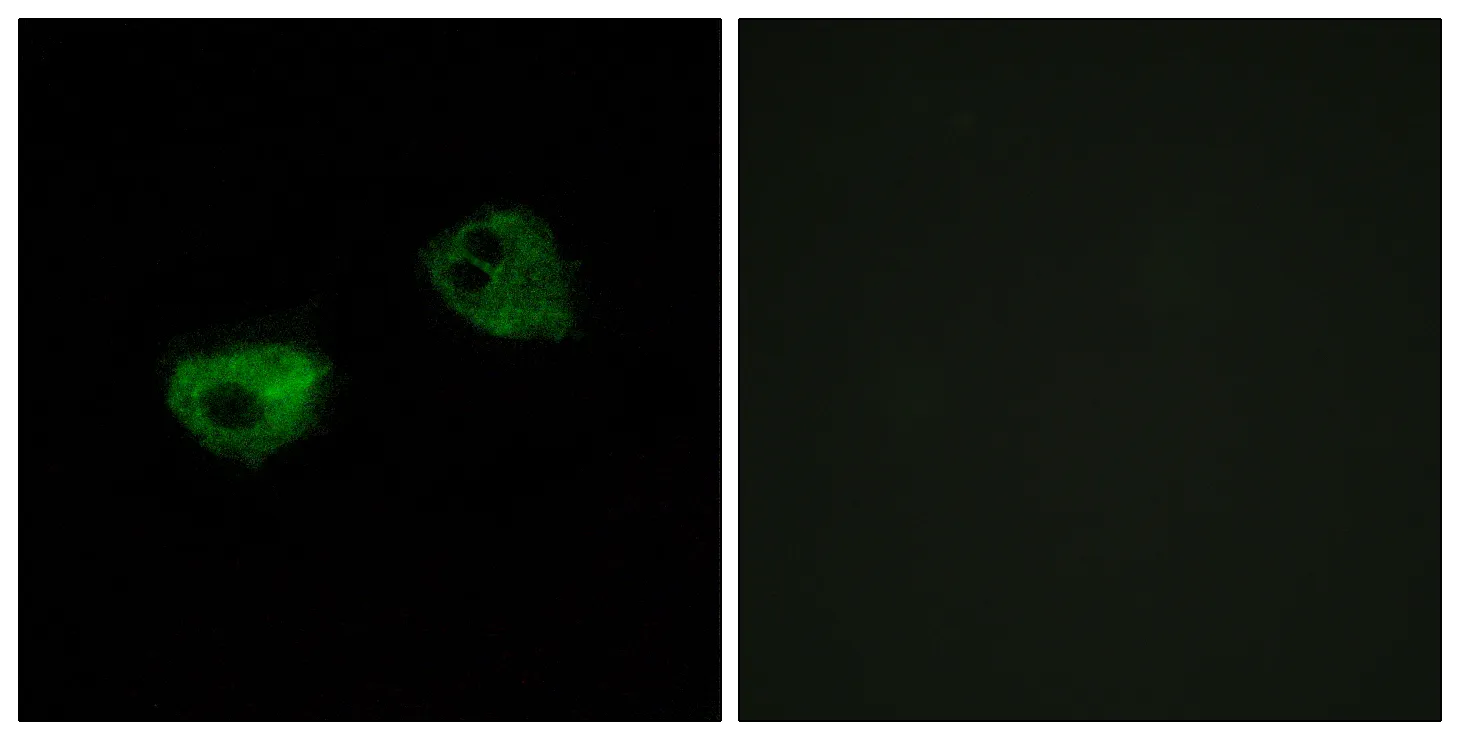
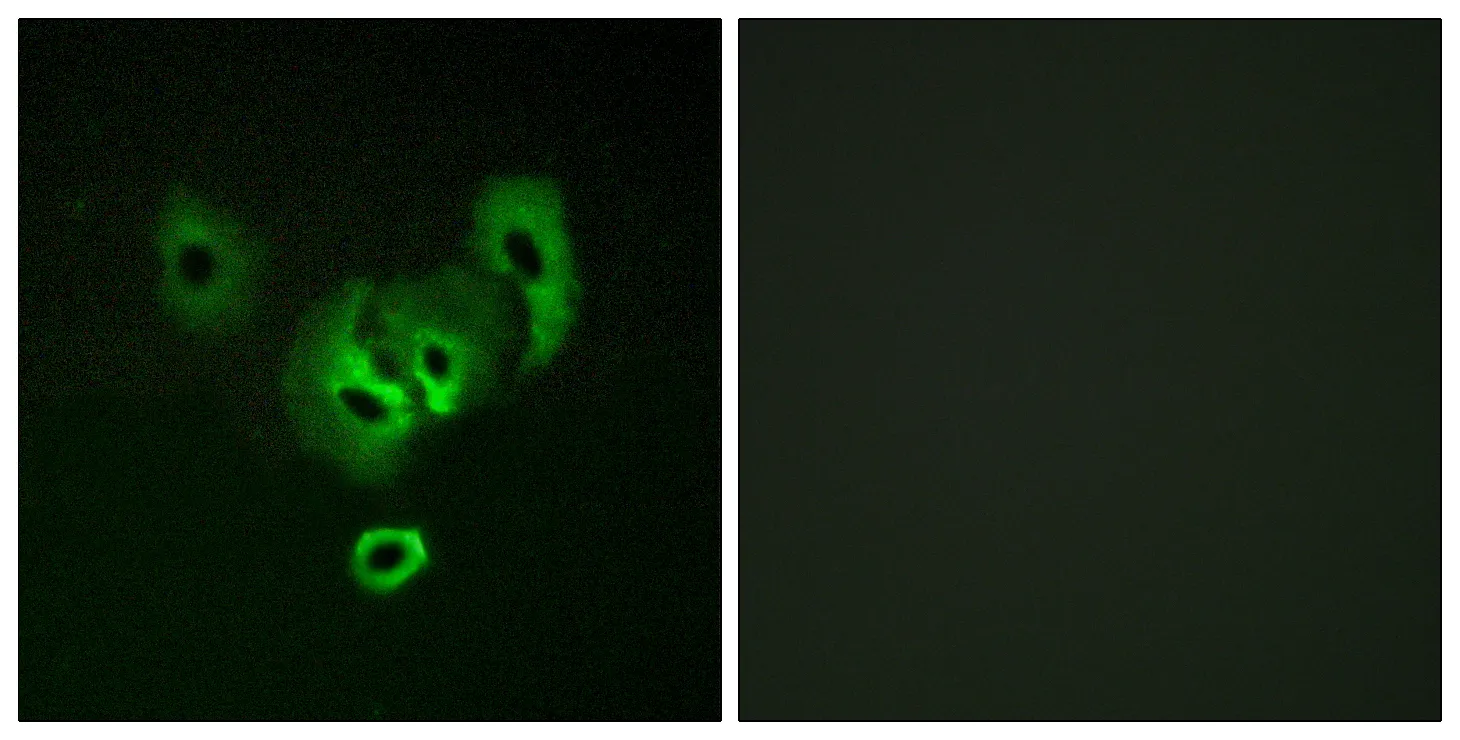
| Anwendung | IHC,ICC/IF,ELISA |
| Verdünnungsverhältnis | IHC 1:100-1:300,ICC/IF 1:50-1:200,ELISA 1:5000-1:10000 |
| Molekulargewicht | - |
Forschungsgebiet
Hintergrund
| CGGBP1 beeinflusst die Expression des FMR1-Gens (MIM 309550), das mit dem Fragilen-X-Syndrom (MIM 300624) assoziiert ist, durch spezifische Interaktion mit der 5'-(CGG)n-3'-Trinukleotidsequenz in der 5'-UTR. [Angaben von OMIM, März 2008] Entwicklungsstadium: Expression im fetalen Gehirn und in der Niere. Geringere Expression in fetaler Leber und Lunge. Funktion: Bindet an nichtmethylierte 5'-d(CGG)n-3'-Trinukleotidsequenzen im FMR1-Promotor. Möglicherweise spielt es eine Rolle bei der Regulation des FMR1-Promotors. Sonstiges: Die Bindung wird durch vollständige oder partielle cytosinspezifische DNA-Methylierung des Bindungsmotivs stark gehemmt. Posttranslationale Modifikation (PTM): Phosphorylierung nach DNA-Schädigung, wahrscheinlich durch ATM oder ATR. Gewebespezifität: Ubiquitär. Stark exprimiert in Plazenta, Thymus, Lymphknoten, Kleinhirn und Großhirnrinde. Geringe Expression in anderen Hirnregionen. |