

HtrA2 Kaninchen-monoklonaler Antikörper
Konjugation: Unkonjugiert
Rekombinanter monoklonaler Kaninchenantikörper
Anwendung
Reaktivität
Mensch, Maus
Genname
HTRA2
Lagerung
Aliquot and store at -20°C (valid for 12 months). Avoid freeze/thaw cycles.
Zusammenfassung
| Produktname | HtrA2 Kaninchen-monoklonaler Antikörper |
| Beschreibung | Rekombinanter monoklonaler Kaninchenantikörper |
| Wirt | Kaninchen |
| Reaktivität | Mensch, Maus |
| Konjugation | Unkonjugiert |
| Modifikation | Unverändert |
| Isotyp | IgG |
| Klonalität | Monoklonal |
| Form | Flüssig |
| Konzentration | Unkonjugiert |
| Lagerung | Aliquot and store at -20°C (valid for 12 months). Avoid freeze/thaw cycles. |
| Versand | Eisbeutel. |
| Puffer | 50 mM Tris-Glycin (pH 7,4), 0,15 M NaCl, 40 % Glycerin, 0,01 % Natriumazid und 0,05 % Schutzprotein |
| Reinigung | Affinitätsreinigung |
Antigeninformation
| Genname | HTRA2 |
| alternative Namen | High temperature requirement protein A2; HTRA 2; HtrA like serine protease; HtrA serine peptidase 2; HtrA; E. coli; homolog of; 2; HtrA2; HTRA2_HUMAN; mitochondrial; Omi stress regulated endoprotease; Omi stress-regulated endoprotease; PARK 13; PARK13; Protease serine 25; PRSS 25; PRSS25; Serine protease 25; Serine protease HTRA2; Serine protease HTRA2 mitochondrial; Serine protease htra2 mitochondrial precursor; Serine protease omi; Serine proteinase OMI. |
| Gene ID | 27429 |
| SwissProt ID | O43464 |
| Immunogen | Ein synthetisches Peptid des humanen HtrA2/Omi |
Anwendung
| Anwendung | WB,IHC,ICC/IF,IP |
| Verdünnungsverhältnis | WB 1:500-1:1000,IHC 1:50-1:100,ICC/IF 1:50-1:200,IP 1:20-1:50 |
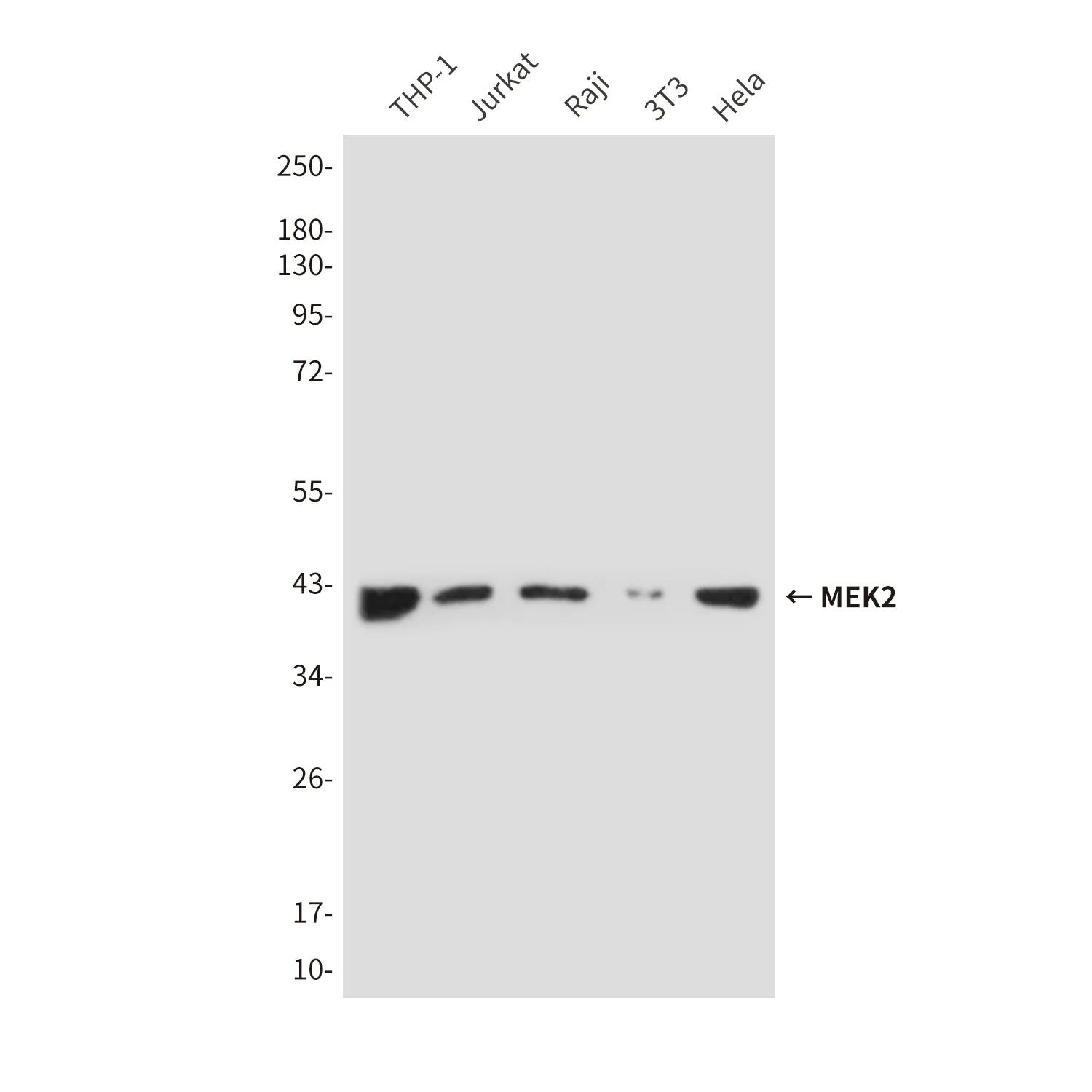
| Molekulargewicht | Calculated MW: 49 kDa; Observed MW: 36 kDa |
Forschungsgebiet
| Neuroscience |
Hintergrund
| Das Hochtemperatur-Anforderungsprotein A2 (HtrA2)/Omi ist eine Serinprotease mit Homologie zum E. coli-HtrA-Protein (DegP) und spielt vermutlich eine Rolle bei der Apoptose und dem stressinduzierten Abbau fehlgefalteter Proteine. Ursprünglich wurde HtrA2 im Zellkern oder im endoplasmatischen Retikulum lokalisiert; spätere Studien zeigten jedoch, dass es in den Mitochondrien vorkommt und während der Apoptose freigesetzt wird. |